OpenCL support levels
The below table shows the current state of OpenCL, SPIR and HSA for each vendor. [table id=6 /] EP = Embedded Profile, FP = Full Profile.
OpenCL support levels Read More »

The below table shows the current state of OpenCL, SPIR and HSA for each vendor. [table id=6 /] EP = Embedded Profile, FP = Full Profile.
OpenCL support levels Read More »
The embedded world is so extremely flexible, because it is full of open standards. We therefore expect that big processor vendors will push harder than Google can push back. OpenCL-support is very important for GPGPU-libraries like ArrayFire, VexCL, ViennaCL – these can be ported to Android in less time. Apple now has introduced Metal on
OpenCL support on recent Android smartphones Read More »

When copying data from global to local memory, you often see code like below (1D data): [raw] if (get_group_id(0)==0) { for (int i=0; i < N; i++) { data_local[i] = data_global[offset+i] } } mem_fence(CLK_LOCAL_MEM_FENCE); [/raw] This can be replaced this with an asynchronous copy with the function async_work_group_copy, which results in more manageable and cleaner code. The
Using async_work_group_copy() on 2D data Read More »
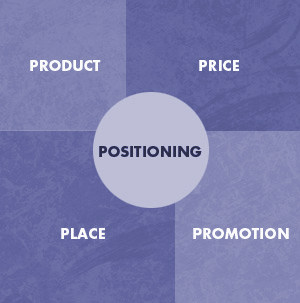
When compute became possible on GPUs, it was first presented as an extra feature and did not change much to the positioning of the products by AMD/ATI and Nvidia. NVidia started with positioning server-compute (described as “the GPU without a monitor-connector”), where AMD and Intel followed. When the expensive Geforce GTX Titan and Titan Z
Market Positioning of Graphics and Compute solutions Read More »

Valgrind is a great tool for finding possible memory leaks in code written in C, C++, Java, Perl, Python, assembly code, Fortran, Ada, etc. I use it to check out if the provided code is ok, before I start porting it to GPU-code. It finds one of those devils in the details. But also for
Valgrind suppression file for AMD64 on Linux Read More »

You can’t ignore accelerators when designing a new cluster for HPC anymore. Back in 2010 I suggested to use GPUs to enter the Top 500 with a budget of only €38k. It takes ten times more now, as almost everybody started to use accelerators. To get into the November top 500 would roughly take a
Building a 150 TFLOPS cluster with Accelerators in 2014 Read More »
At Intel they have CPUs (Xeon, Ivy Bridge), GPUs (Isis) and Accelerators (Xeon Phi). OpenCL enables each processor to be used to the fullest and they now promote it as such. Watch the below video and see their view on why OpenCL makes a difference for Intel’s customers. This is important, because till recently Intel
Intel promotes OpenCL as THE heterogeneous compute solution Read More »
Khronos just announced three OpenCL based releases: SYCL 1.2 Provisional Spec – Abstraction Layer for Leveraging C++ and OpenCL WebCL 1.0 Final Spec – JavaScript bindings to OpenCL OpenCL 2.0 Adopters Program – Conformance for OpenCL 2.0 implementations Below I’ve quoted the summaries. For each of these I’ve prepared articles, but due to lack of
Big announcements: SYCL 1.2, WebCL 1.0 and OpenCL 2.0 Read More »

Khronos just sent out the below message to Press and Game Developers. To my understanding, there are many game devs under the readers of this blog, so I’d like you to share the message with you. JOIN KHRONOS GROUP AT GDC 2014 SAN FRANCISCO Press Conference, Technology Sessions and Refreshment OasisWe invite you to attend
Khronos Invites Press & Game Developers to Sessions @ GDC San Francisco Read More »

This article actually discusses the question: is GPGPU a solution for the masses, or is it for niche-products? For the latter open standards matter a lot less, as you will read. If you watch the below video on sale&marketing by Victor Antonio, then you get what is so difficult about open standards: It pushes all
Commodity and Open Standards – why OpenCL matters Read More »