
November is our case study month
Multiple case studies are being shared every week of November. Be sure to come back regularly to see what else we have shared.
-

Graph-based deep learning on AMD GPUs: building hipDNN’s normalization engine
Modern AI frameworks think in computation graphs, so the GPU libraries underneath them need to understand graphs too. AMD asked us to help accelerate hipDNN, its new graph-based deep-learning library for ROCm. We contributed a HIP-native engine for normalization operations and cut the time its test suite spends on the CPU by moving reference implementations…
-

Portable GPU binaries: SPIR-V support for AMD’s ROCm libraries
AMD’s SPIR-V adoption lets GPU software compile once and specialize on the device at runtime. But the ROCm libraries assumed the wavefront size was known at compile time, which broke SPIR-V compilation entirely. We refactored four of AMD’s core libraries to fix this, without any performance regression. In this case study we’ll give some insight on…
-
We made the world’s first 1 PFLOP/s FlashAttention on a single H100 GPU providing the fastest AI image generation possible
We worked on this project at the end of 2023 and in early 2024. NVIDIA’s Hopper GPUs had just been on the market, but popular AI frameworks offered little to no support for 8-bit inference at the time. Several other optimizations were also waiting for our attention. In this case study we’ll give some insight…
-

Fast machine learning on Apple Silicon: building a Metal inference engine
We worked on this project from mid-2023, with the main effort through the end of September 2023. NVIDIA GPUs get most of the attention in AI, but our client wanted to bring fast generative AI to Apple’s Mac Studio. In this case study, we explain how we built a Metal inference engine that beats Apple’s…
-
The Fastest Payroll System Of The World
At StreamHPC we do several very different types of projects, but this project has been very, very different. In the first place, it was nowhere close to scientific simulation or media processing. Our client, Intersoft solutions, asked us to speed up thousands of payroll calculations on a GPU. They wanted to solve a simple problem,…
-
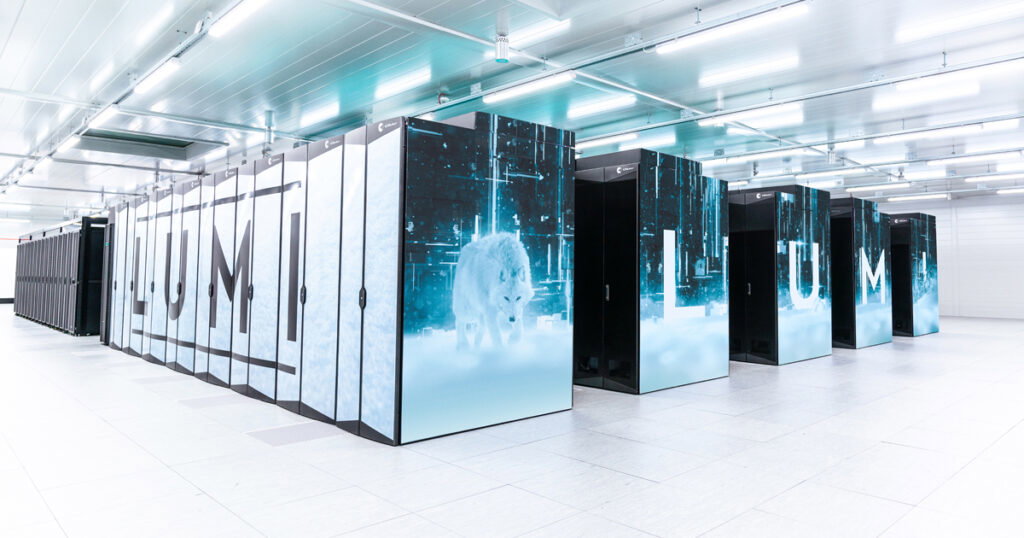
Porting Molecular Dynamics Software to LUMI and FRONTIER Supercomputers
We ported molecular dynamics software (AMBER, GROMACS, OpenMM) from CUDA to AMD’s HIP framework for LUMI and FRONTIER supercomputers. All software achieved expected performance or better on AMD MI250X GPUs. We share some details about what we did for AMBER and OpenMM. Introduction For years, Nvidia dominated the supercomputing market. However, AMD gained significant traction…
-
We accelerated the OpenCL backend of pyPaSWAS sequence aligner
Last year we accelerated the OpenCL-code in PaSWAS, which is open source software to do DNA/RNA/protein sequence alignment and trimming. It has users world-wide in universities, research groups and industry. Below you’ll find the benchmark results of our acceleration work. You can also test out yourself, as the code is public. In the readme-file you…
-

ESA’s MAPPS project ported to the GPU with OpenCL
Sometimes you find simulations being ported to a supercomputer, while they can actually run on a laptop. ESA found that one of their simulation software was getting more demanding, but wanted to keep it running on their work laptops. Read how we ported ESA’s MAPPS project to multicore CPU and GPU with OpenCL. About the…
-

Learn about AMD’s PRNG library we developed: rocRAND – includes benchmarks
When CUDA kept having a dominance over OpenCL, AMD introduced HIP – a programming language that closely resembles CUDA. Now it doesn’t take months to port code to AMD hardware, but more and more CUDA-software converts to HIP without problems. The real large and complex code-bases only take a few weeks max, where we found…
-

Bug fixing the MESA 3D drivers
Most of our projects are around performance optimisation, but we’re cleaning up bugs too. This is because you can only speed up software when certain types of bugs are cleared out. A few months ago, we got a different type of request. If we could solve bugs in MESA 3D that appear in games. Yes,…
-
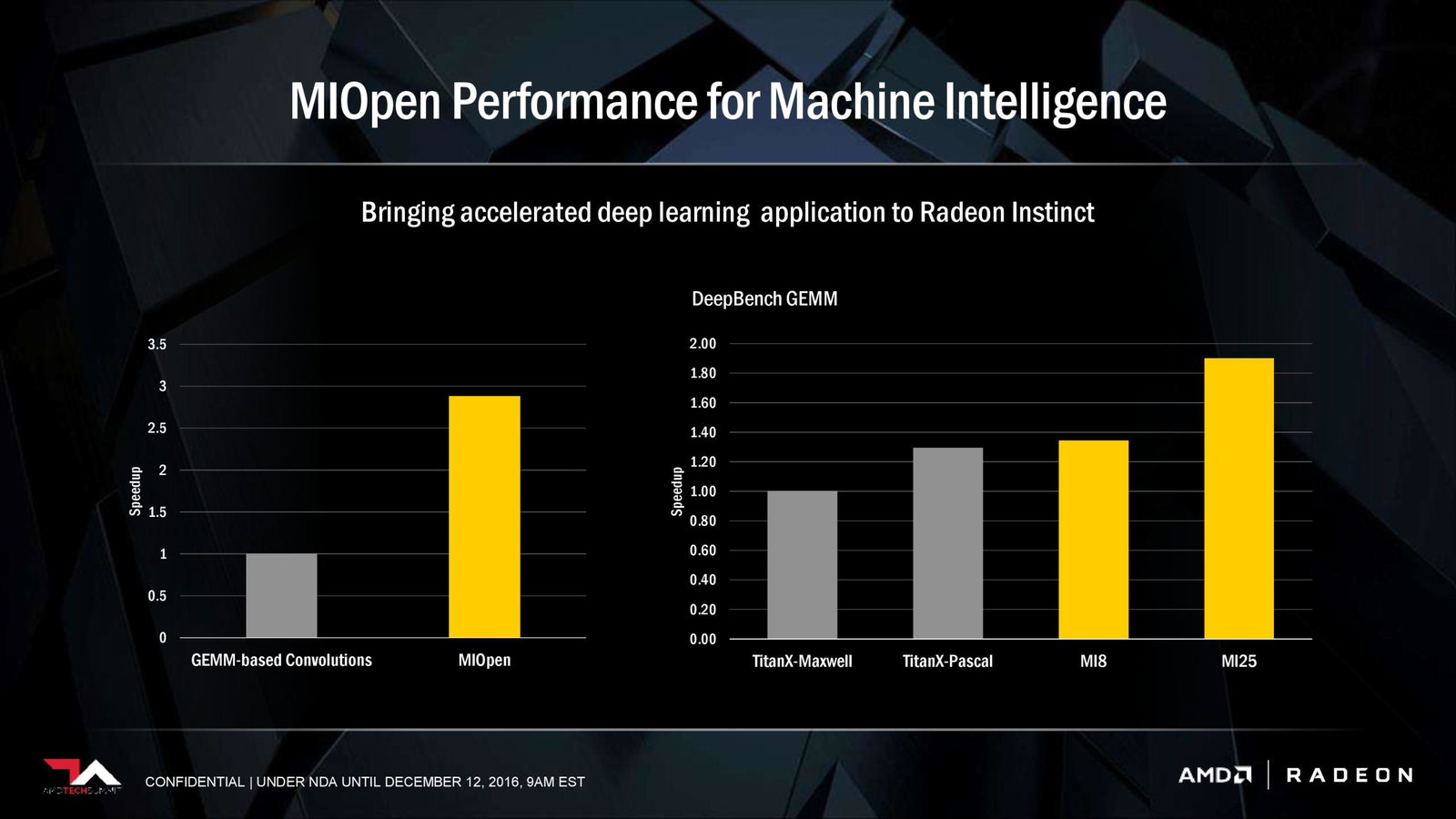
Caffe and Torch7 ported to AMD GPUs, MXnet WIP
Last week AMD released ports of Caffe, Torch and (work-in-progress) MXnet, so these frameworks now work on AMD GPUs. With the Radeon MI6, MI8 MI25 (25 TFLOPS half precision) to be released soonish, it’s ofcourse simply needed to have software run on these high end GPUs. The ports have been announced in December. You see…
-

Porting GROMACS from CUDA to OpenCL: giving researchers a choice of hardware
GROMACS is one of the most widely used molecular dynamics packages in the world, running simulations of proteins, polymers and other soft matter on supercomputers and GPU clusters. In 2014, it could only use NVIDIA GPUs, because all its GPU code was written in CUDA. Research groups that had invested in other hardware could not…
-

How we sped up a flooding simulation 35 times (from 32-core CPU to multi-GPU)
How water moves through an area given a certain pace of instream, can be fully simulated. We got a request to make such simulation faster, as it took already too much time to do moderate simulations. As the customer wanted to be able to have more details, larger areas and more alternative situations computed, the current…
-

Porting Manchester’s UNIFAC to OpenCL@XeonPhi: 160x speedup
As we cannot use the performance results for most of our commercial projects because they contain sensitive data, we were happy that Dr. David Topping from the University of Manchester was so kind to allow us to share the data for the UNIFAC project. The goal for this project was simple: port the UNIFAC algorithm to the…
-

Turning a mathematician’s energy-trading model into production software
A clean-tech startup had a mathematical model that could predict energy use well enough to trade electricity in 30-minute windows. The problem: a single prediction took hours to compute, and the trading window closed in 25 to 28 minutes. Together with their scientists, we took the computation from several hours to under 30 seconds using…
Now it’s time we solve your Big Compute Problem
Fill in the below contact form and we’ll get back to you.